



The High Valuation Code — Assets today. Wealth tomorrow. Intangible assets. Extraordinary value.
Enterprise Value Architecture

Your business may be successful.But is it valuable without you?

Revenue makes you successful.Transferable assets make you valuable.Transferable value gives you options.Options create wealth.

Discover the hidden risks suppressing your valuation — and the assets that can turn business success into transferable wealth.

Testimonials

What founders say

Founder testimonial video 1 about The High Valuation Code
Founder testimonial video 2 about The High Valuation Code
Founder testimonial video 3 about The High Valuation Code
Founder testimonial video 4 about The High Valuation Code

Free diagnostic · Immediate insight · No obligation

12
Enterprise Value Outcomes
72
Diagnostic Questions
144
Valuation Killers
144
Valuation Multipliers

The High Valuation Code™ is an Enterprise Value Architecture for founder-led businesses. It identifies where value is trapped, where it is exposed, and what needs to be built to make the business more transferable, scalable and valuable.

From Income to Assets

You built the income.Now build the asset.

Most founders spend years learning how to generate revenue. Far fewer learn how to convert that revenue, expertise, knowledge, systems, relationships and intellectual property into transferable assets.

The High Valuation Code asks a different question: how much of what you have built can create value without you?

From Income to Assets — Matteo Turi FCCA

Income rewards you for what the business produces today.Assets can create wealth long after the work has been done.

Discover My High Valuation Score
The Central Problem

The Valuation Gap

The difference between the value a founder has created and the value the business can actually retain, transfer and monetize without them.

Most founders spend years creating value. Far fewer build the assets that allow the business to keep it.

The Wealth Gap

The Valuation Gap is the difference between value created and value captured by the enterprise. The Wealth Gap is the consequence for the founder when that value cannot be transferred, monetized or realized.

Find my Valuation Gap
$12M
Value created
$7M
Transferable enterprise value
Valuation Gap · $5M

That $5M is not simply a valuation problem. It represents potential founder wealth that has not yet been made transferable.

Figures are illustrative only.

Where the Gap Comes From

Most of the value is stillinside the founder.

A profitable company can still receive a disappointing valuation. Buyers, investors and lenders look beyond revenue — they look for transferable value.

Most of that value is still sitting inside the founder: what you know, who you know, what only you decide.

Value trapped inside the founder

KnowledgeRelationshipsReputationDecision-makingProcessesIntellectual propertyDistributionDataCustomer relationshipsSupplier relationships

Trapped Wealth

Value created by the founder that has not yet been converted into transferable business assets.

Relationships that belong to the founder
Knowledge that has never been documented
Processes that exist only through experience
IP that has not been protected
Reputation attached to an individual
Revenue dependent on the founder selling
Supplier relationships dependent on personal trust
Strategic knowledge that cannot survive succession

The High Valuation Code helps identify where that value is trapped and what needs to be built around it.

“I've spent 15 years building this. How much of it actually belongs to the business?”

“What happens to the company's value if I step away?”

“Would a buyer be buying a business — or buying me?”

“How much wealth is trapped inside a company that still depends on me?”

“Am I building something valuable, or simply building myself another job?”

If the value leaves when you leave, you don't fully own the value yet.

Founder Dependency — Matteo Turi FCCA
The Founder Paradox

The more your business needs you,the less transferable it may be.

Being indispensable can feel like a strength. To an investor, buyer or successor, it can represent risk.

If customers buy because of you, relationships belong to you, knowledge sits inside you and important decisions depend on you, the business may be successful without yet being truly transferable.

Knowledge

Lives in the founder

Relationships

Depend on the founder

Decisions

Return to the founder

Delivery

Requires the founder

The High Valuation Code turns founder dependency into institutional capability.

Find My Valuation Killers
The Economy Changed

Stop valuing a new-economy businesswith an old-economy mindset.

The old economy was dominated by physical assets. The new economy increasingly creates value through intellectual property, data, software, AI, brand, networks, systems, knowledge and scalable distribution.

Yet many founders still manage their businesses as though revenue and profit tell the entire story.

The Intangible Economy — Matteo Turi FCCA

Old Economy

PropertyPlantEquipmentInventoryPhysical distribution

Intangible Economy

Intellectual PropertyDataAIBrandSystemsNetworksKnow-howDigital DistributionRecurring Relationships

The High Valuation Code™

IdentifyCodifyProtectMonetizeTransfer
The Core Message

Founders build revenue.Buyers buy assets.

Revenue tells you what the business produces. Assets determine how much of that value can survive without the founder.

The High Valuation Code turns what the founder knows, controls and creates into what the business owns.

  1. Founder KnowledgeStage 1
  2. Documented KnowledgeStage 2
  3. SystemStage 3
  4. Business AssetStage 4
  5. Transferable ValueStage 5
  6. Enterprise ValueStage 6
  7. Founder WealthStage 7
  8. Freedom & OptionalityStage 8
Invisible and unbuilt assets — Matteo Turi FCCA
Trapped Wealth

Your business may own morethan your balance sheet shows.

Some of the most valuable assets in a founder-led business never appear clearly on the balance sheet. They exist as knowledge, processes, methods, relationships, reputation, data, systems and intellectual property.

Until they are identified and structured, much of that value remains trapped.

The Unbuilt Asset Map

Founder KnowledgeProprietary Methodology
Repeated ProcessTransferable System
ExpertiseIntellectual Property
Customer DataProprietary Data Asset
AudienceDistribution Asset
ReputationBrand Asset
AI WorkflowAutomation Asset
RelationshipsInstitutional Network
MethodLicensable Product
ServiceRecurring Product

The asset may already exist in your business.It simply hasn't been built yet.

Discover My Unbuilt Assets
Risks

144 Valuation Killersacross 12 enterprise value domains

A codified taxonomy of structural weaknesses that make future cash flows less predictable, less transferable or more dependent on individuals.

K01

Founder Dependency

Value creation still routes through one person.

K02

Customer Concentration

Too much revenue resting on too few accounts.

K03

Undocumented Knowledge

Critical know-how lives only in people's heads.

K04

Unprotected IP

Real intellectual property with no ownership perimeter.

K05

Weak Recurring Revenue

Future cash flows buyers cannot model.

K06

Key-Person Relationships

Clients loyal to individuals, not the firm.

Outcome 4 — Monetised AI & Intangibles

K37Unowned Intellectual Property
K38Undocumented Know-How
K39No Licensing Architecture
Find my Valuation Killers
Opportunities

144 Valuation Multipliersacross 12 enterprise value domains

Valuation Killers expose where value is vulnerable. Valuation Multipliers show what can be built instead.

M01

Management Independence

M02

Recurring Revenue

M03

Protected IP

M04

Strategic Partnerships

M05

Proprietary Data

M06

Brand Equity

Outcome 4 — Monetised AI & Intangibles

M37Protected Intellectual Property
M38Proprietary Data Asset
M39Licensing Revenue
The Architecture

The 12 Enterprise Value Outcomes

Not modules. The structural components of the High Valuation Code. Select any outcome to see what changes.

Current position
Finance reports the past.
Valuation risk
No line of sight between decisions and enterprise value.
Desired state
Every financial decision is a valuation decision.
Potential assets
Valuation model, reporting system, KPI architecture.
Valuation Killers
Poor governance, weak forecasting.
Valuation Multipliers
Governance, capital optionality.
Enterprise Value Architecture

The High Valuation Code™ Architecture

One connected system — from the gap in the business today to transferable enterprise value tomorrow.

01CategoryEnterprise Value Architecture
02MethodologyThe High Valuation Code™
03DiagnosticHigh Valuation Score
04Core problemValuation Gap
05Risks144 Valuation Killers
06Opportunities144 Valuation Multipliers
07ExecutionValuation Transformation Modules
08JourneyHigh Valuation Bridge
09Value modelHigh Valuation Waterfall
10OutcomeTransferable Enterprise Value
The High Valuation Score

What will you discover?

A structured diagnostic — not a quiz. It identifies where potential enterprise value — and therefore potential founder wealth — may be trapped.

Your High Valuation Score reveals

01

Your Founder Dependency

02

Your Transferability

03

Your Valuation Killers

04

Your available Valuation Multipliers

05

Your underdeveloped business assets

06

Your Exit Readiness

07

Your Enterprise Value Architecture

08

Your priority actions

See where business value may be trapped before you spend another year simply growing revenue.

63

High Valuation Score

63 / 100

17
Valuation Killers identified
23
Valuation Multipliers available
8
Underdeveloped business assets
Founder DependencyCRITICAL
Transferability43/100
Exit Readiness38/100
Recurring Revenue57/100
IP & Intangible Assets44/100
Management Independence41/100

Top 3 priorities

01Intellectual Property
02Management Independence
03Recurring Revenue

Illustrative only. The High Valuation Score is a strategic diagnostic and not a formal business valuation.

Discover my score
Think Like the Buyer

Revenue is what you see.Risk is what investors price.

Two businesses can generate identical revenue and identical EBITDA and still command radically different valuations.

Because sophisticated investors don't only price financial performance. They price risk, predictability, transferability, defensibility, scalability and optionality.

The investor mindset — Matteo Turi FCCA

The multiple is not random.It reflects the quality of the business behind the numbers.

Investor thinkingValuation MultipliersEnterprise Value
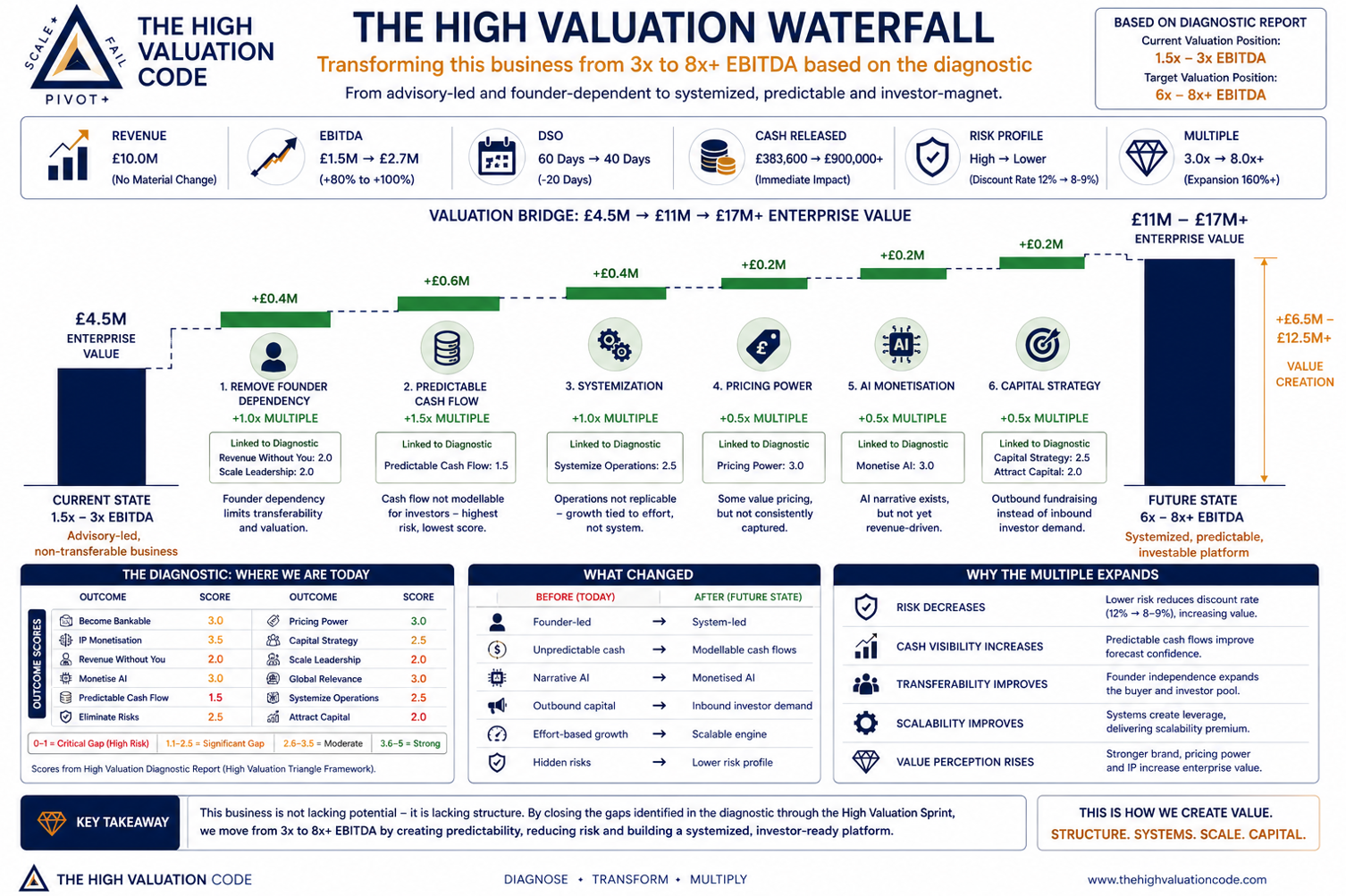
The High Valuation Waterfall

You don't just grow EBITDA.You engineer the multiple.

EBITDA

$1M

Base multiple

3.0×

Enterprise value

$3M

Multiplier expansionUpliftCumulative multipleEV
Founder Independence+0.8×
3.8×
$3.8M
Recurring Revenue+0.9×
4.7×
$4.7M
Protected IP+0.7×
5.4×
$5.4M
Governance+0.5×
5.9×
$5.9M
Management Depth+0.8×
6.7×
$6.7M
Strategic Positioning+0.7×
7.4×
$7.4M
Risk Reduction+0.5×
7.9×
$7.9M
Illustrative outcome7.9× EBITDA$7.9M

$4.9M

Illustrative enterprise value gap

Same $1M EBITDA.Different enterprise. Different wealth outcome.

Illustrative example only. Actual valuation multiples and enterprise values vary materially by industry, scale, profitability, growth, market conditions, risk profile and transaction structure. The High Valuation Code does not provide or guarantee a specific valuation uplift.

The High Valuation Waterfall — an illustrative valuation bridge
The High Valuation Bridge

From where the business is — to what it could be worth.

Today

  • Founder dependent
  • Knowledge trapped
  • Relationships personal
  • Processes informal
  • IP underdeveloped
  • Revenue dependent

The High Valuation Bridge

  • 12 Outcomes
  • Valuation Killers
  • Valuation Multipliers
  • Asset Creation
  • Governance
  • Strategic Transformation

High-Value Enterprise

  • Transferable
  • Scalable
  • Defensible
  • Investable
  • Less founder dependent
  • Exit ready
How the System Works
01

Diagnose

Complete the High Valuation Score.

02

Identify

Expose Valuation Killers and trapped value.

03

Design

Identify the assets and Valuation Multipliers required.

04

Build

Use Valuation Transformation Modules to convert capability into assets.

05

Multiply

Build a company that is more scalable, transferable, investable and exit-ready.

Valuation is not something you calculate at the end.It is something you engineer from the beginning.

The Journey

Diagnose first. Build second.

01

High Valuation Score

Discover the gap.

Start here
02

High Valuation Diagnostic

Understand what is suppressing value.

03

High Valuation Sprint

Prioritise and build.

04

High Valuation Private

Transform the enterprise.

05

High Valuation Board

Protect and compound value.

The Founder

Matteo Turi FCCA

Creator of The High Valuation Code™ — an Enterprise Value Architecture for founder-led businesses. Matteo works with founders of $1M–$50M companies to convert years of effort into transferable assets, reduce founder dependency, and build businesses that hold value without their owner in the room.

Author of Fail. Pivot. Scale. and architect of the Valuation Killers and Valuation Multipliers frameworks behind the High Valuation Score.

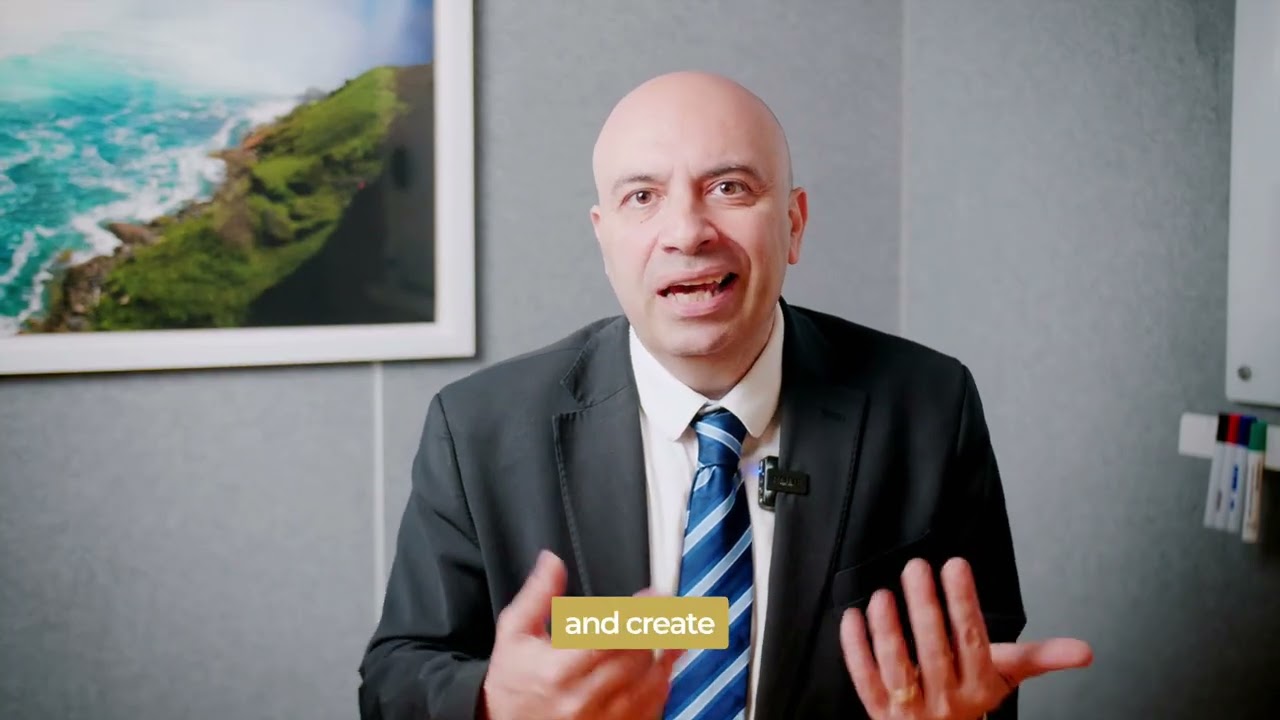
Matteo Turi FCCA introduces The High Valuation Code
Portrait of Matteo Turi FCCA

Matteo Turi FCCA

Founder, The High Valuation Code

The Book

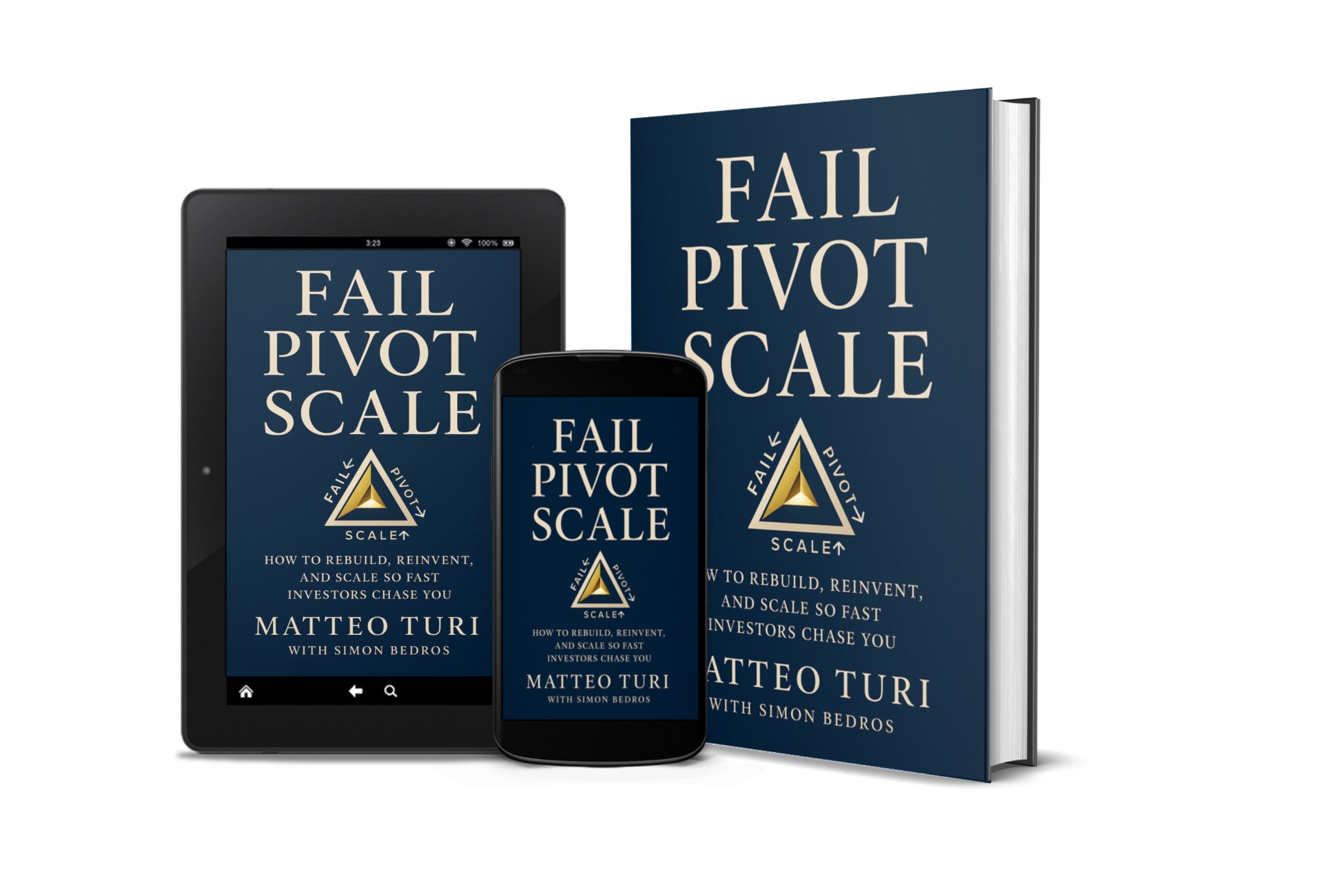
Fail. Pivot. Scale.

How to rebuild, reinvent, and scale so fast investors chase you. The playbook behind the High Valuation Code — by Matteo Turi FCCA with Simon Bedros.

Fail. Pivot. Scale. by Matteo Turi FCCA
Watch

See the framework in action

A long-form workshop on how the High Valuation Code transforms owner-dependent businesses into capital-ready assets.

Who This Is For

Built for established founder-led businesses with approximately $1M–$50M in annual revenue. Especially powerful for founders who have built a successful business but remain central to sales, relationships, knowledge, operations or strategic decision-making.

Built for

  • Founders scaling beyond themselves
  • Owners preparing for investment
  • Businesses preparing for succession or exit
  • Advisors and CFOs building enterprise value
  • Companies converting expertise into assets

Not built for

  • Businesses looking for a quick valuation number
  • Founders unwilling to document how value is created
  • Anyone seeking growth tactics without structural change
Strategic Collaborations

From building value to realizing it.

The High Valuation Code™ is being developed alongside strategic relationships that extend across the enterprise-value journey — from preparing businesses for capital and transactions to protecting value after an acquisition.

Corporate Finance01
14 Countries

International corporate finance collaboration

Collaboration with an established corporate finance business operating across 14 countries, connecting the High Valuation Code methodology with transaction readiness, capital strategy and enterprise-value realization.

CapitalM&AValue Realization

Post-Merger Value Creation02
35
Countries
350+
Global team
500+
M&A projects

Global post-merger integration collaboration

Global Partners

Collaboration extending the enterprise-value journey beyond the transaction into post-merger integration and value realization.

Global Partners brings specialist M&A, integration and transformation capability across 35 countries, with a global team of 350+ professionals and experience across 500+ M&A projects.

M&A IntegrationValue CreationTransformationCarve-outs

Attribution: the 35 countries, 350+ global team and 500+ M&A projects are the footprint and experience of Global Partners. The 14-country footprint belongs to a separate corporate finance collaboration. These figures do not describe The High Valuation Code™, which does not itself operate offices in those countries or complete M&A transactions. Relationships are non-exclusive and do not imply endorsement.

01

Build value

02

Make it transferable

03

Prepare for capital or transaction

04

Realize value

05

Protect value after the deal

The High Valuation Code™ connects the founder's business-building journey with the wider enterprise-value ecosystem.

We don't just want founders to build more valuable businesses.We want them to be able to realize the wealth they have created.

Build Transfer Realize Protect

Evidence

A global enterprise value methodology built for founder-led businesses.

$300M+
Financing experience
$12M → $220M
Valuation transformation experience
$30M
Bad debt recovery
31 years
Finance, governance, M&A and enterprise transformation
Matteo Turi FCCA

Matteo Turi FCCA

Valuation Architect · Author · CFO · Board Director

Author of "Fail. Pivot. Scale." Works with founders and CFOs to convert operating capability into enterprise value.

Marguerite Bolze

Marguerite Bolze

M&A and Transformation

Advises owners through succession, investment and exit — where structure, governance and buyer confidence decide the multiple.

Associates
Francisco Gaffney

Francisco Gaffney

Governance & Compliance

Howard Moore

Howard Moore

AI Architect & AI Governance

The people support the methodology. The methodology does not depend on personality.

Partner Ecosystem

Specialists engaged once the gaps are known.

The diagnostic tells you what needs to be built. The ecosystem tells you who builds it — legal, tax, IP, capital and M&A specialists, brought in against a defined valuation objective.

Legal
Tax
Corporate Finance
M&A
IP & Trademarks
Governance
Capital & Lending
Technology
High Valuation Intelligence

Learn to see your businessthe way investors do.

Explore the ideas behind the High Valuation Code — from financial architecture and pricing to intellectual property, founder dependency, AI, transferability and enterprise value.

Explore High Valuation Intelligence
The Destination

Enterprise value is not the final destination.Wealth is.

A founder can build a successful company and still have most of their wealth trapped inside it.

Revenue

creates income.

Profit

creates cash.

Transferable assets

create enterprise value.

Enterprise value creates options.

01

Sell

Bring value into a transaction.

02

Invest

Bring in outside capital without surrendering unnecessary value.

03

Acquire

Use enterprise strength to acquire other businesses.

04

License

Monetize intellectual property without selling the company.

05

Step back

Reduce founder dependence without destroying value.

06

Succession

Transfer the company to management or the next generation.

07

Hold

Continue owning an increasingly valuable enterprise.

You do not need to be selling your business to build it as though one day you could.

Exit readiness is not about planning to leave. It is about building a business valuable enough that leaving becomes a choice.

Sell it.Keep it.Pass it on.Step back.Raise capital.Acquire.

The objective is optionality.

The High Valuation Code is not ultimately about achieving a higher valuation number. It is about converting years of founder effort into assets that can create wealth independently of the founder.

Assets today.Wealth tomorrow.

Founder CapabilityBusiness AssetsTransferable ValueEnterprise ValueFounder Wealth

The more value the business can own independently of its founder, the more options the founder can potentially own personally.

Discover my High Valuation Score

You built the business.Now make sure the business builds your wealth.

Discover where value is trapped, where your business remains dependent on you, and which assets could make that value more transferable.

Discover my High Valuation Score

Free diagnostic · Immediate insight · No obligation

Assets today. Wealth tomorrow.

The High Valuation Score is a strategic diagnostic tool. It does not constitute a formal business valuation, nor financial, legal or investment advice.